The Pyjama Steps Out
Interior designer Nina Klimova turns her own wardrobe into a Vienna-made collection, and a hundred-year-old idea of dressing at home gets a tailored new chapter
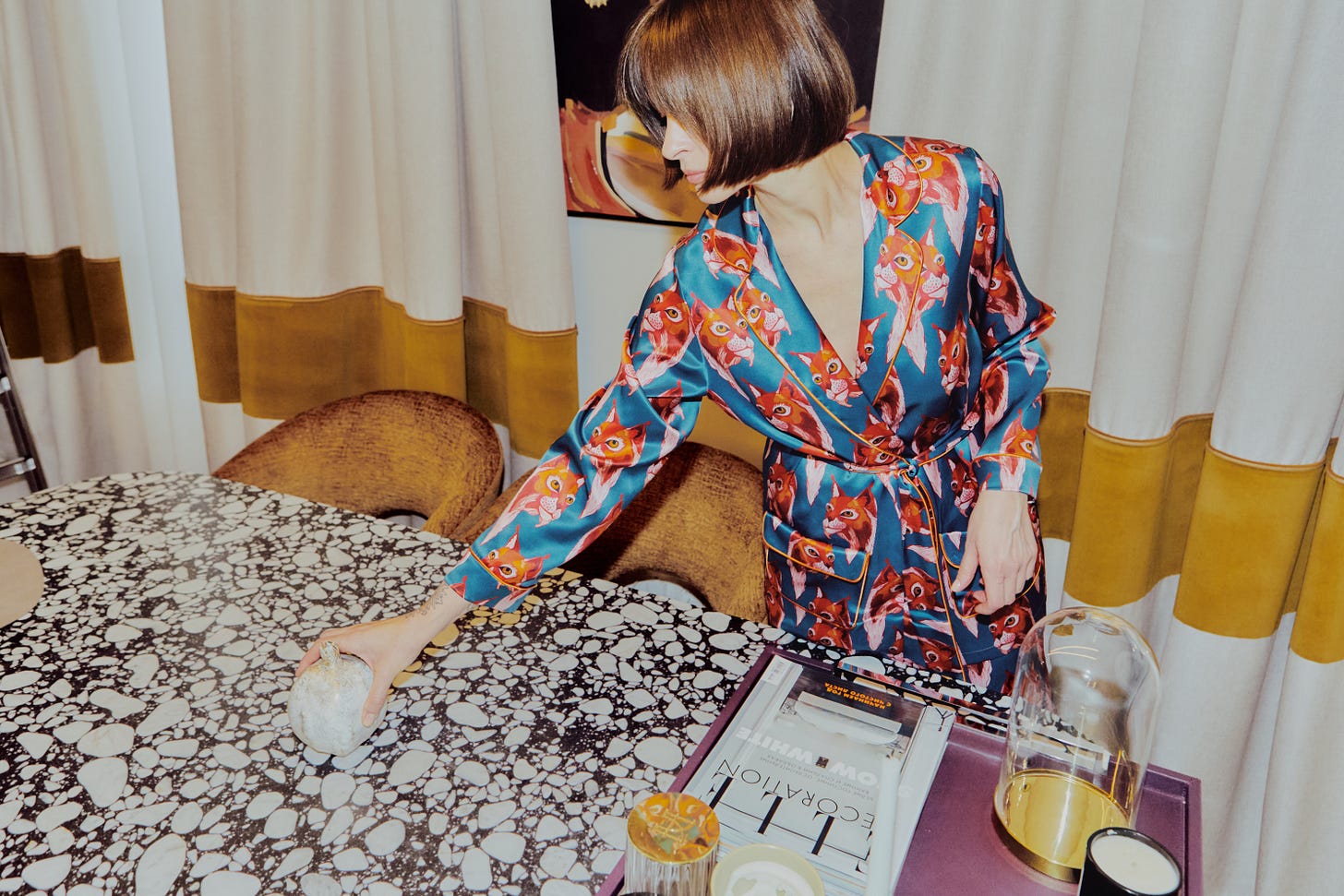
Vienna has a long and slightly forgotten relationship with the pyjama. The MAK, the city’s museum of applied arts, holds Wiener Werkstätte fashion designs for pyjamas, among them one cut from a patterned fabric called Mohn (poppy) and another by Max Snischek for a 1930 special issue of Wiener Mode, rendered in black and blue crêpe satin, painted and embroidered by hand. Nightwear was evidently once regarded in this city as a legitimate surface for ornament, a garment worth the attention of the same designers who were reshaping the rooms people lived in.
It is fitting, then, that the latest chapter comes from someone who shapes rooms for a living. Nina Klimova has spent more than a decade as an interior designer, and she is credited as co-founder of the Visionnaire flagship in Vienna and head designer at Home Interiors Vienna. Her residential project Wonderland, completed with Arevente & Partner, took bronze at the International Architecture & Design Awards 2026, where she is described as an expert in interiors and textiles. Her first fashion collection, a line of luxury pyjamas made in her own atelier, follows the same logic as her rooms, only at a more intimate scale.
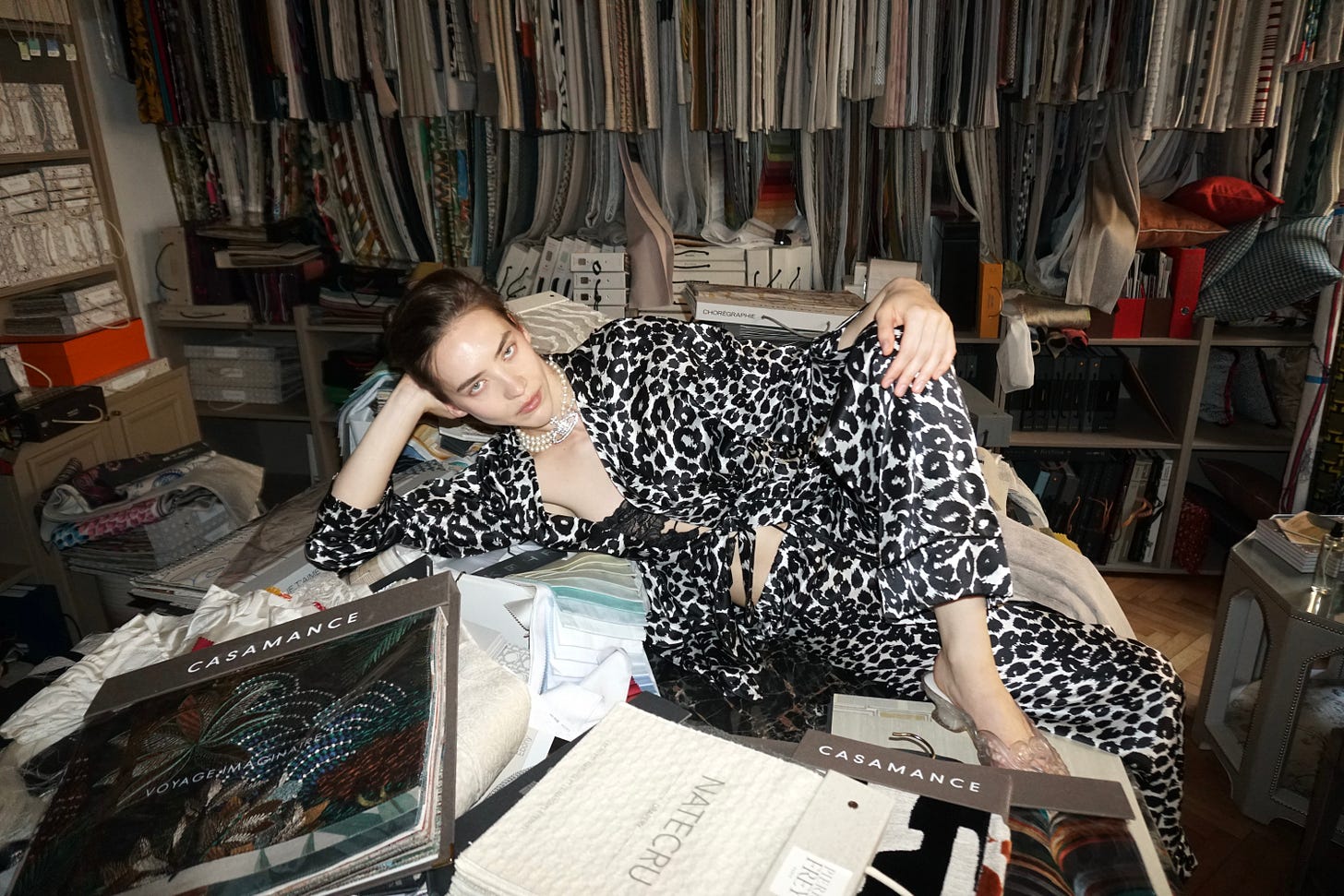
True luxury lies in individuality.
A wardrobe that began with compliments
The collection did not start as a business plan. Klimova kept being asked about the pieces she wore herself, the silks and the carefully chosen sets she moved between her own living spaces and the evening, and at some point the answer to those questions became a design brief. Fashion and the art of living well, two worlds she had always treated as neighbours, finally share an address.
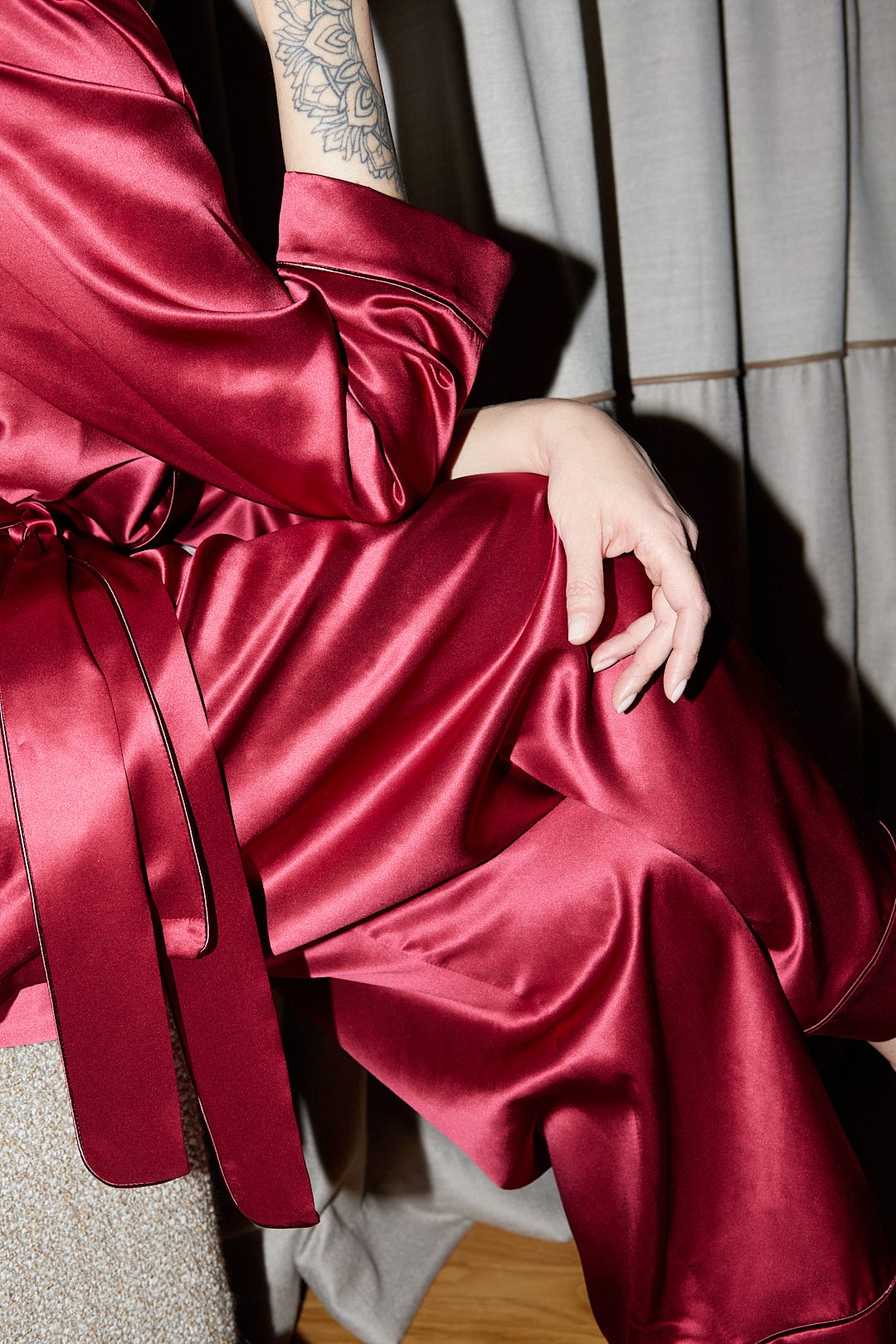
The pyjama is the centre of the collection, and the design vocabulary reads like that of an architect who has decided to dress the person instead of the room. Silhouettes are clear and reduced, construction is kept to what is essential, and seams are held to a minimum, so that the weight of the garment on the skin carries the whole experience. A finely worked elastic waistband replaces the usual fuss of fastenings. Klimova describes the feeling against the body as the starting point of every piece, which is a fairly rare priority in a category where the photograph tends to come first.
For the evening she styles the sets with a sparkling brooch, a pair of statement earrings or elegant shoes, a few accents that turn a garment made for the sofa into a look made for dinner.
A century of dressing at home, and then leaving the house
None of this is new, and that is a large part of its charm. The pyjama left the bedroom in the 1920s, when Coco Chanel helped popularise the beach pyjama along the Riviera, a wide-legged, slightly scandalous outfit that gave women freedom of movement and gave casino doormen something to disapprove of. It returned in 1960 in the form of Irene Galitzine’s silk evening trousers and tunics, first shown in the Sala Bianca at Palazzo Pitti in Florence and christened palazzo pyjamas by Diana Vreeland, an ensemble that went on to dress a jet-set clientele and spawn imitations from Pucci to Valentino. By the 1970s, Halston was cutting bias-cut satin pantsuits he called pyjama dressing, and magazines were advising readers to buy their evening clothes in the lingerie department.
Each of these moments coincided with a loosening of rules, around women’s trousers, around formality, around where the private ends and the public begins. The present moment fits the pattern. Luxury sleepwear worn out of the house has been a recurring theme this year, with fashion media describing a softer replacement for athleisure and runway looks, among them one from The Row’s summer collection, that borrow openly from the nightgown. Klimova’s collection arrives at exactly the point where the home, increasingly treated as the place where people invest in small, well-made things, has started to dictate the cut of the wardrobe.
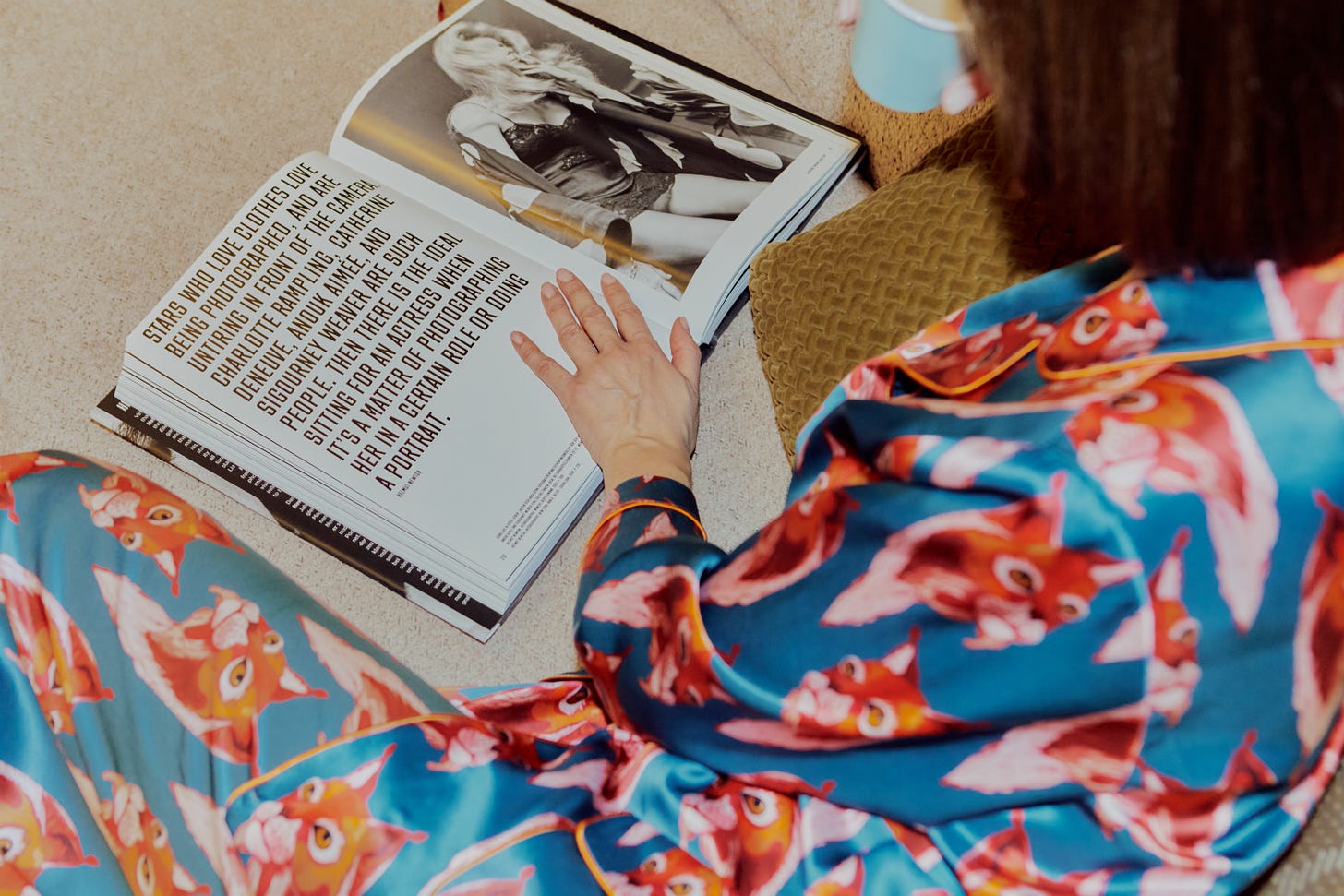
Made in Vienna, made to measure the person
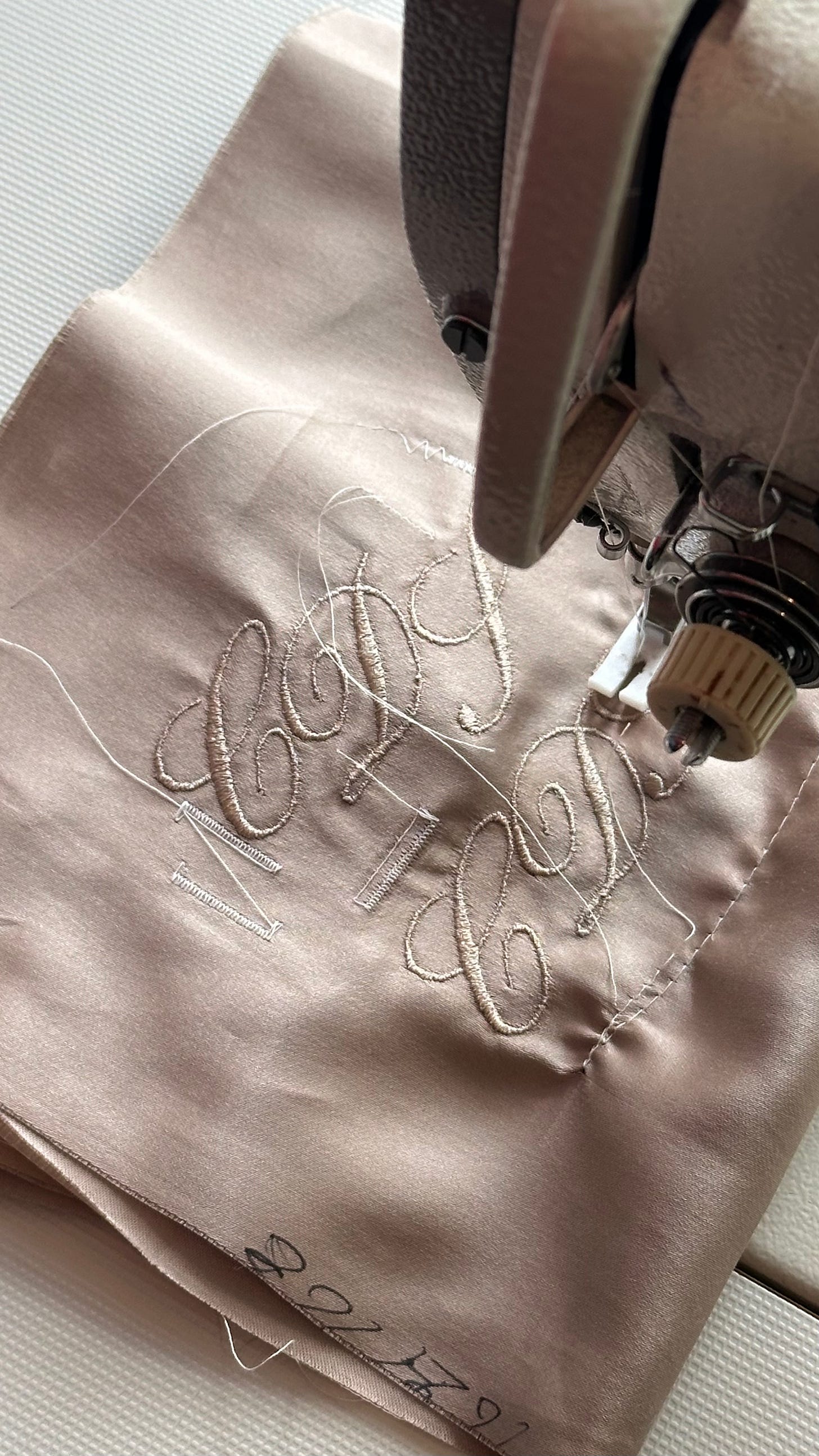
The most interesting idea in the collection comes from her other profession. Interior design, as practised at the level she works, is a conversation about customisation, and Visionnaire’s own account of a Viennese villa Klimova led describes a client who valued above all the chance to adapt the furniture until the result was entirely his. The same principle governs the pyjamas. Each set can be tuned to the person who will wear it, from the choice of fabric and the colour to the finer details and individual embroidery, all completed in the Vienna atelier from carefully selected materials sourced with chosen suppliers and partners.
What emerges is closer to a commissioned piece than to a collection in the retail sense, a one-of-a-kind garment finished with time and attention, which places it in the lineage of the Wiener Werkstätte more directly than any amount of nostalgia could. The craft here is the point, along with a restraint that lets materials and workmanship do the talking, and Klimova’s decision to keep the production local gives the pieces a provenance that most loungewear has long since outsourced.
What the room asks of the wardrobe
There is a cultural thesis hiding in the elastic waistband. For years fashion has treated the home as a place to be dressed down for, and the pyjama as the garment of surrender. A designer who spends her days deciding how a living room should feel has reached the opposite conclusion, that the hours spent at home deserve the same care as the hours spent out, and that a garment can belong to both without apology. If the wardrobe now takes its cues from the living room, it remains to be seen which other rooms of the house will follow the pyjama out of the door.